01 · The engine
A giant fan, driven by a jet engine at its core
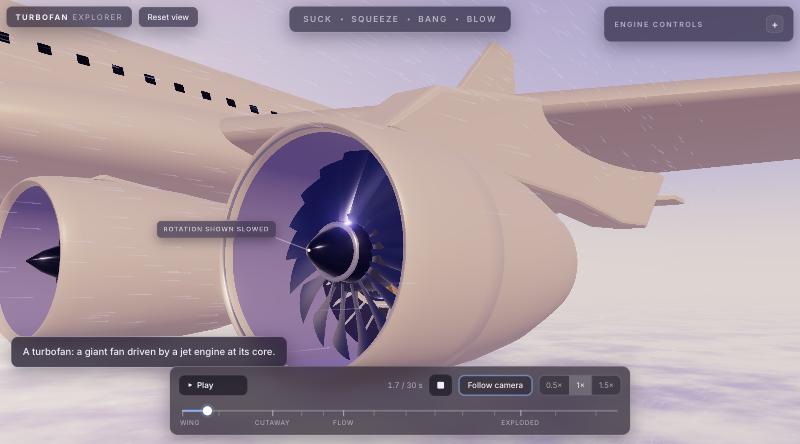
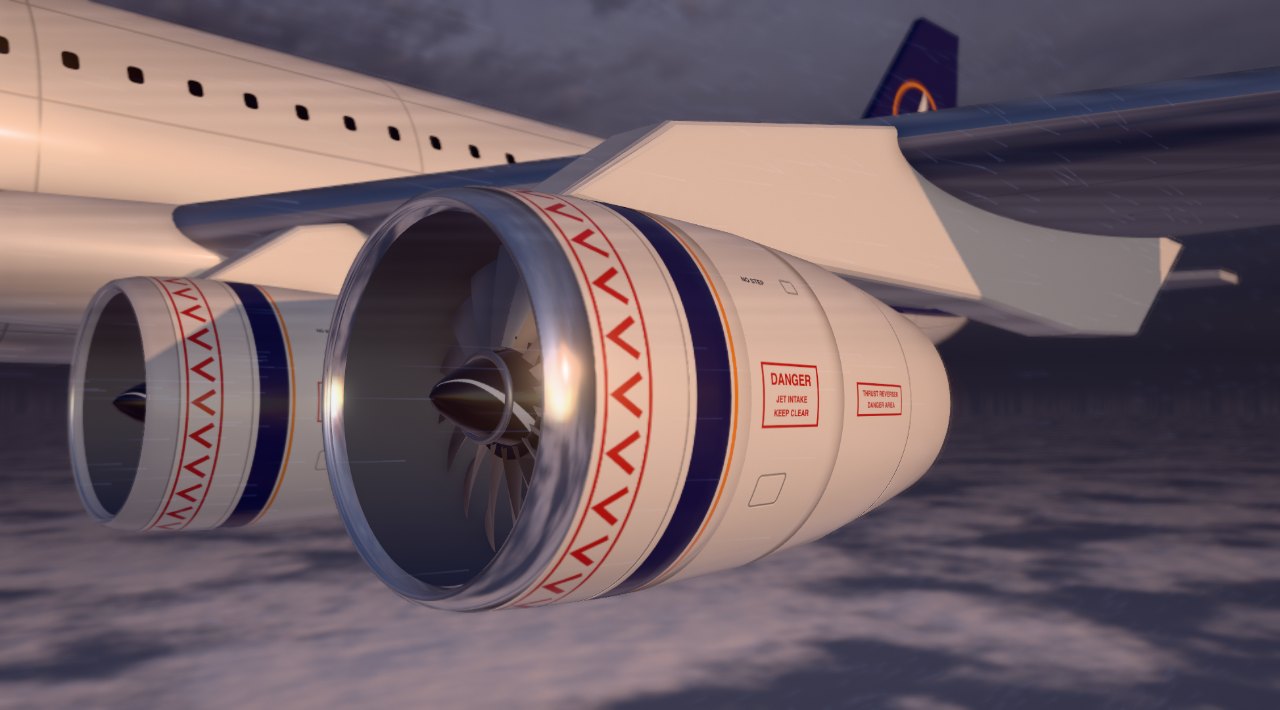
This is a turbofan. Almost every airliner flying today hangs two or four of them under its wings.
. Kept on this device only.
An interactive lesson
Suck, squeeze, bang, blow. Scroll to take one apart.
01 · The engine
This is a turbofan. Almost every airliner flying today hangs two or four of them under its wings.
02 · Cut it open
Slice it down the middle and the layout is simple. Everything is arranged along one line, in the order the air meets it.
03 · Two shafts
The inner shaft joins the fan to the turbine at the very back. The outer one joins the main compressor to its own turbine and turns about four times faster.
04 · Suck
Over a tonne every second at take-off. Most of it never enters the core. It goes around, through the bypass duct, and makes most of the thrust.
05 · Squeeze
Squeezing heats it to around 600 °C before any fuel has been added.
06 · Bang
The gas leaves at more than 1,500 °C. That is hotter than the melting point of the turbine blades it is about to hit.
07 · Blow
The blades survive with cooling air and heat-resistant coatings. The turbines drive the compressor and the fan, so the engine keeps itself running.
08 · All at once
Pull the engine apart and every piece has one job in that chain. The push backwards on the air is a push forwards on the aircraft.
Part two
Thrust is only the start. Follow the same four engines through one landing.
09 · More than thrust
Each one also turns a generator and a hydraulic pump, and gives up some of its compressed air. Lights, controls, wheels and the air in the cabin all run on that.
10 · The air you breathe
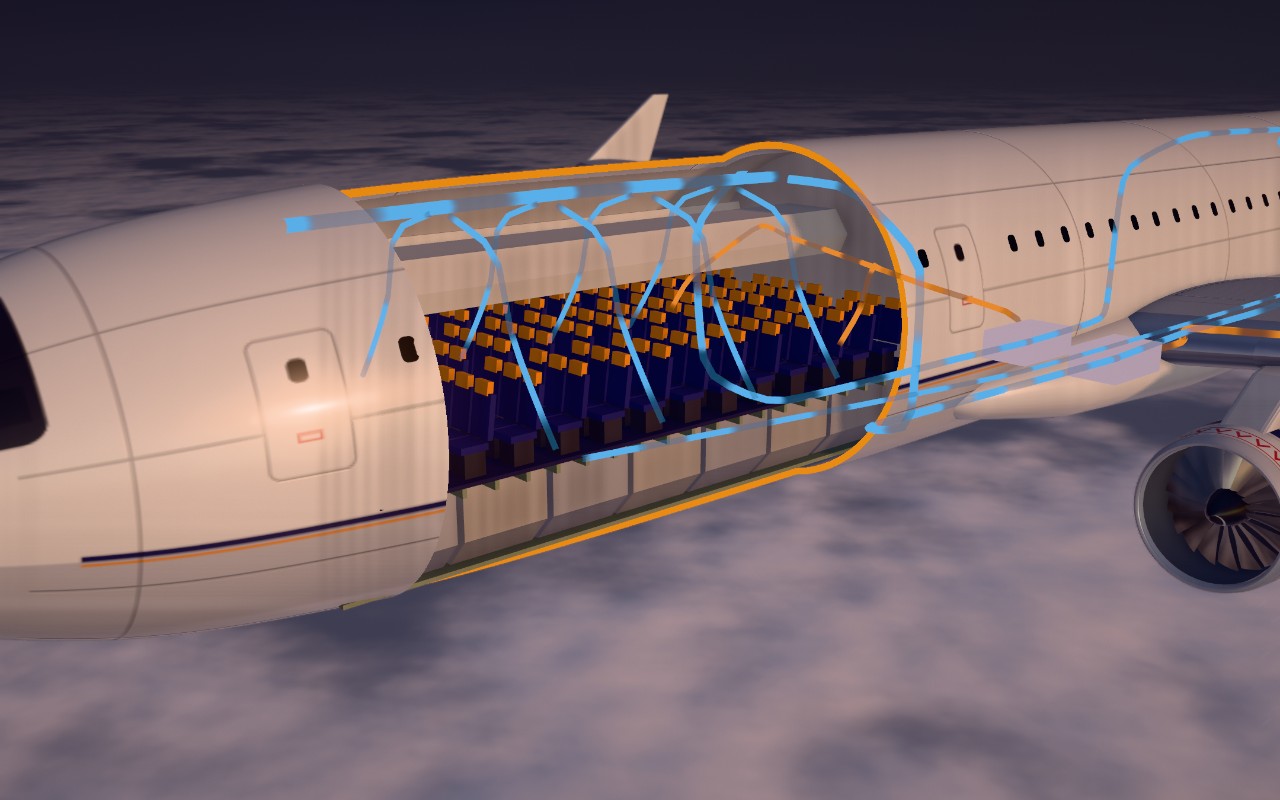
Outside it is about −55 °C and too thin to breathe. Air bled from the engines is cooled in the belly, piped in along the ceiling, and let out at the back at just the rate that holds the pressure.
11 · Wheels down
Pumps on the engines keep oil at about 200 times atmospheric pressure. It opens the doors, swings the legs down and locks them, in about fifteen seconds.
12 · A different wing
A wing made for 900 km/h cannot hold the aircraft up at landing speed. Slats slide forward, flaps slide back and down, and the wing becomes bigger and more curved.
13 · Touchdown
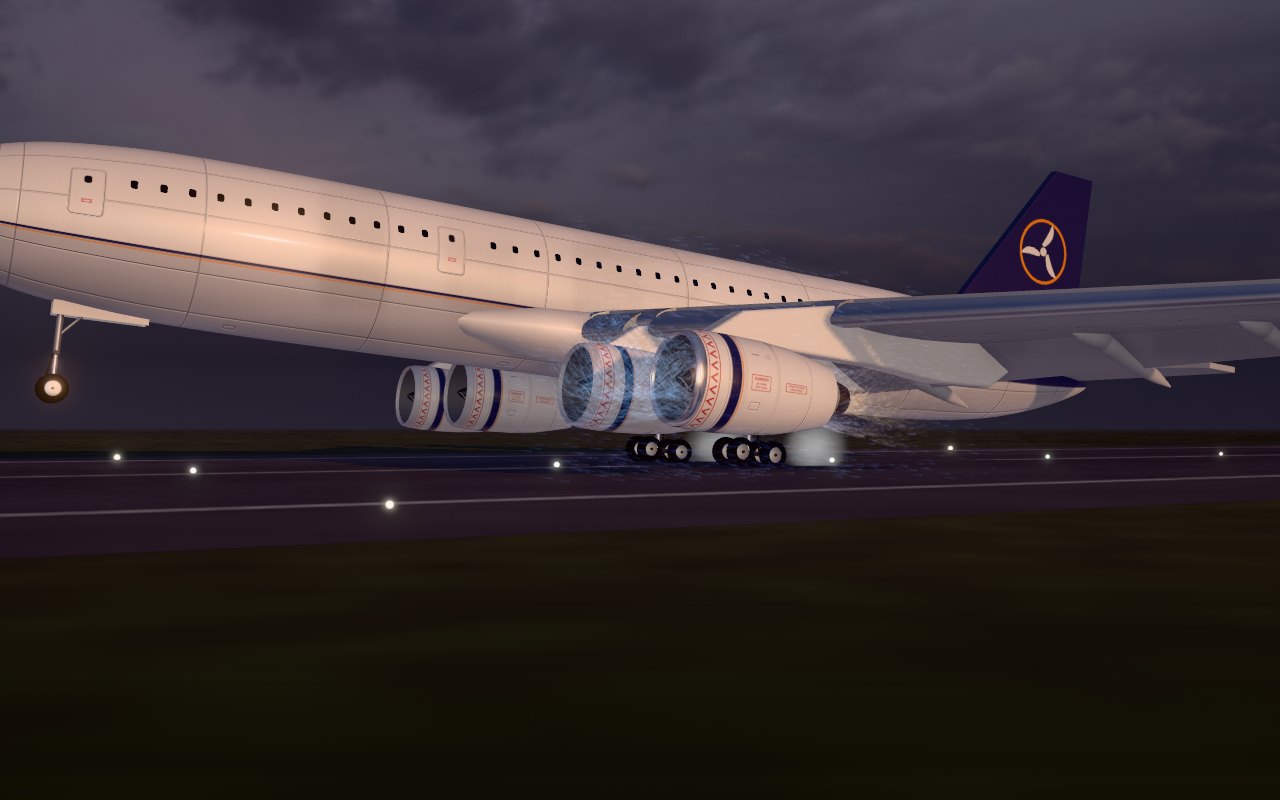
The engines are at idle. The main wheels touch first, spin up from nothing in a puff of smoke, and the nose is lowered after them.
14 · Stopping
Panels flip up on the wing so the weight sits on the wheels and the brakes can bite. The engines' cowls slide back and the fan air is turned to push against the motion.
15 · Walking pace
Every step of it ran on power taken from the engines: air, oil pressure, electricity and, at the end, their thrust turned around.
Behind it
It began as a recreation of a thirty-second demo and grew into a short course on how an airliner works. Everything above is drawn live in your browser: there is no video on this page.
The engine, the aircraft, the cabin and the runway are built from code as the page loads: surfaces of revolution, twisted blades, extruded sections. The only pictures are a photograph of the sky and the livery artwork.
Each wall is a closed shell. A clipping plane slices it, and a second copy of the shell draws only its inside faces in flat orange. Wherever the cut passes through metal, you see a section.
Both films are functions of time and nothing else. The same code plays them, scrubs them, and lets your scrolling drive them, so the story and the films can never drift apart.
Gauges, graphs and cards run on a small model of a large airliner engine. The figures are typical and rounded, not one real engine: right in size and in how they move together.
Concept after the Turbofan Explorer demo by @techartist_. Built with Three.js and Vite, working with Claude Code; look development with Claude Design. Sky: Belfast Sunset (Pure Sky) by Dimitrios Savva and Jarod Guest, Poly Haven, CC0.